The Payoff Trap: Designing Wargames That Reward Players for Gaming the Scenario, Not Solving It
 E. Sokolov
Every wargame has a scoring system, even if nobody calls it that. Points, victory conditions, umpire praise, promotion prospects back at the unit: something tells players what counts as winning. And players, being players, optimize for whatever that something is. The problem is that the thing you can measure is almost never the thing you actually care about.
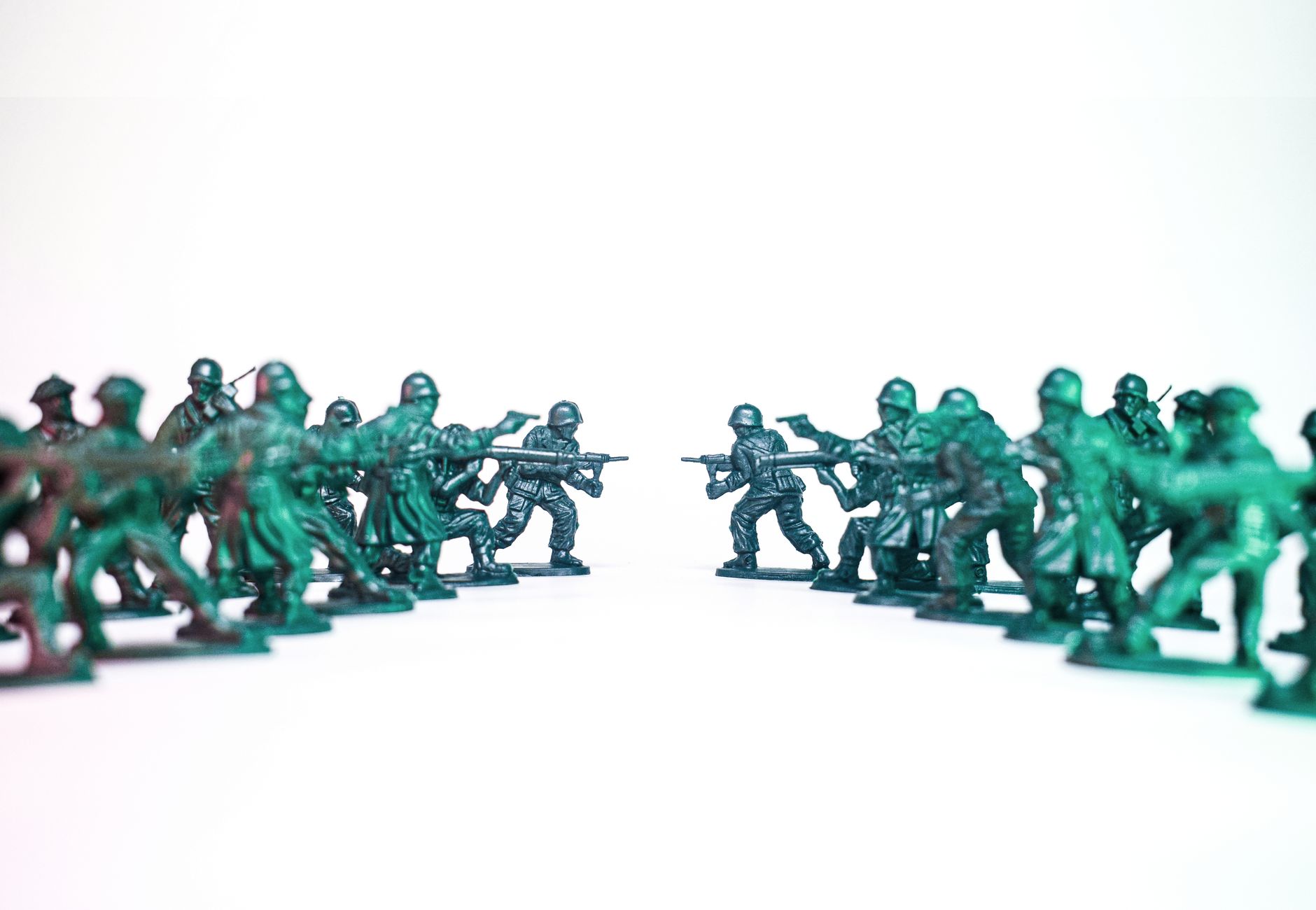 Photo by Saifee Art on Pexels.
I watched this happen at a joint logistics exercise a few years back (details altered for obvious reasons). The scenario rewarded units for maintaining supply throughput above a threshold. Smart design, in theory: throughput is measurable, legible, easy to adjudicate turn by turn. Within two iterations, the blue team had figured out that the fastest way to hit the threshold was to reroute shipments through a notionally contested corridor that the model scored as 'open' due to a stale intelligence flag nobody had bothered to update. They weren't solving the logistics problem. They were solving the scoring problem, which happened to share some surface features with the logistics problem but diverged sharply at the edges.
This is the payoff trap: any sufficiently gameable metric will eventually get gamed, and the players who find the exploit look, on paper, like your best performers.
Why this matters more than it seems
In a tabletop exercise, a gamed metric just produces bad data. You walk away thinking your logistics doctrine is robust when actually your scoring rubric has a hole in it. That's bad enough. But the deeper cost is behavioral: players learn, across repeated exercises, that the way to succeed is to find the scoring loophole rather than build genuine competence. Run enough wargames with exploitable payoffs and you train an officer corps that's excellent at reading rubrics and mediocre at the underlying problem.
Designing against it
There's no metric immune to gaming, so the goal isn't to find an unexploitable one. The goal is to make exploitation visible and costly.
Build a shadow scorer. Run a second, undisclosed evaluation alongside the official one, scored by a different adjudicator using different criteria. If a team scores well on the official metric but poorly on the shadow metric, that gap is itself data. It tells you exactly where your legible proxy diverges from the thing you actually wanted.
Introduce audit turns. At irregular intervals, freeze the game and have an umpire interrogate the leading team's rationale: why did you route through that corridor, what intelligence did you base that on? Teams gaming the metric usually can't explain their move in terms of the scenario's actual stakes. They can explain it in terms of the rubric. That tell is almost always visible once you ask.
Decay stale advantages. If a shortcut depends on an intelligence flag or terrain assumption that was true at turn one but should have changed by turn ten, build in decay. Static assumptions are exactly what exploiters hunt for, so force the scenario's underlying state to drift even when nobody's looking at it.
Reward legible process, not just legible outcome. Give partial credit for teams that flag uncertainty in their own moves ('we're not confident this corridor is actually open, we're taking the risk'). That incentivizes honesty about the gap between model and reality, which is the opposite of what a purely outcome-based score produces.
graph TD
    A[Official Metric] --> B{Team Optimizes}
    B --> C[Genuine Competence]
    B --> D[Scoring Loophole]
    D --> E[Shadow Scorer Flags Gap]
    E --> F[Audit Turn: Umpire Interrogates Rationale]
    F --> G[Loophole Exposed and Patched]
The post-game tell
In the after-action review, ask the winning team to explain their strategy in plain language, no jargon from the scoring sheet. If they can't articulate why their choices made sense against the scenario's real stakes, rather than the scoreboard's stakes, you've found your payoff trap. Fix the metric before you run the exercise again, or you'll just be training the next cohort to find the same hole faster.
The uncomfortable truth is that a wargame's scoring system is itself a model, with all the blind spots that implies. Treat it with the same suspicion you'd apply to any other assumption buried in the simulation, because the players will find it long before the designers do.
Get Uncertainty Game in your inbox
New posts delivered directly. No spam.
No spam. Unsubscribe anytime.