The Redundant Confirm: Designing Wargames That Expose False Consensus Among Players
 E. Sokolov
False consensus kills teams quietly. Everyone nods, the order goes out, and three people in the room had three different pictures of what was just decided. Nobody lied. Nobody dissented. The catastrophe assembles itself from the gap between what was said and what was understood.
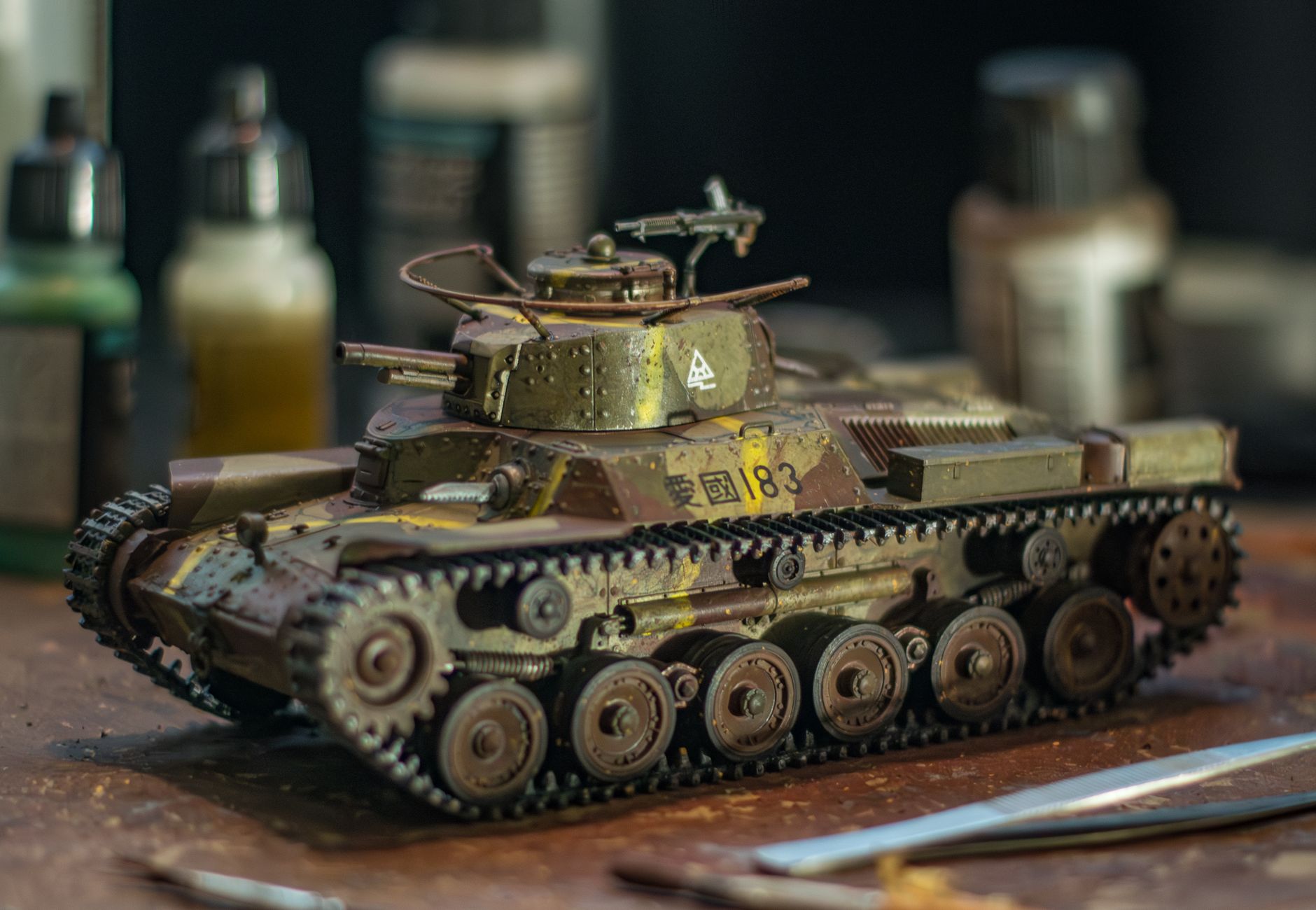 Photo by Matias Luge on Pexels.
Most wargames don't stress-test this at all. They treat team agreement as binary: either the team decided, or it didn't. What they miss is the entire spectrum of apparent consensus that dissolves the moment execution begins.
Call it the Redundant Confirm problem. When confirmation loops exist but carry no real information, when everyone says "roger" because everyone else said "roger," the communication system is producing noise dressed as signal. You need a wargame that can detect this before a live scenario finds it for you.
Why Standard Designs Miss It
The failure mode is structural. Most tabletop exercises run decisions through a single spokesperson or team lead. That person speaks; the umpire records the decision; play continues. You never discover whether the other four people at the table understood the same thing, because they're never asked separately.
Historical evidence for how badly this matters: the confusion surrounding orders at Gallipoli in 1915, where multiple commanders received the same directives and produced radically different interpretations without anyone flagging the divergence until troops were already moving. More recently, post-mortems on the 2003 Baghdad Phase IV planning process revealed that civilian and military leadership operated under genuinely incompatible assumptions about post-conflict timelines, both groups believing consensus existed because nobody formally objected.
The wargame never surfaces this because the wargame only records outputs, not the internal state of the players producing them.
The Sealed Interpretation Mechanic
Here's a concrete design response. Before any major decision is implemented in your wargame, require each player on the deciding team to independently write down three things on a card:
- What was decided
- Who owns execution
- What the decision does NOT authorize
Cards go face-down to the umpire. The umpire reads them before adjudicating the outcome. Divergences don't automatically block the decision. Instead, the umpire uses them to introduce execution friction proportional to the spread of interpretations.
High divergence: the action proceeds, but slowly, with a coordination cost injected into the timeline. Moderate divergence: one player's interpretation gets treated as the operative one (the umpire chooses, not the team). Perfect consensus: the action proceeds cleanly. Players never learn which mechanic triggered. They just see the effects.
This matters because it teaches teams to confirm redundantly as a habit, and it does so through consequence rather than instruction.
graph TD
    A[Team Decision Point] --> B{Sealed Interpretation Cards}
    B --> C[Umpire Reads Cards]
    C --> D{Divergence Level?}
    D --> E[/Low: Clean Execution/]
    D --> F[Medium: One Interpretation Wins]
    D --> G((High: Friction Injected))
    G --> H[Team Sees Consequence]
    F --> H
    E --> H
Designing the Debrief to Surface Root Cause
The mechanic only works if the after-action review reveals what happened and why. During the debrief, read the cards aloud. Then ask one question only: "What did the team do that would have caught this divergence before execution?"
Not "why did you disagree." Not "whose interpretation was right." The question targets the process gap, not the content of the disagreement. You're building a reflex, not assigning blame.
Run this mechanic at least twice per exercise, at decision points you've seeded for likely divergence. A good candidate is any decision made under time pressure immediately after a role transition (a new player joins the team mid-scenario, for example). Another is any decision that requires interpreting an ambiguous intelligence product, which you should already have baked in if you've read the Decoy Briefing post.
A Note on Player Resistance
Expect pushback. Experienced teams hate this mechanic on first contact because it feels like a gotcha. "We were aligned, we just phrased it differently." Maybe. But phrasing differently under pressure is how execution diverges. Hold the line. The point of the mechanic isn't to catch teams being wrong; it's to show them that their alignment is shallower than they think.
That discomfort is the product. A team that finishes your wargame mildly irritated by how often their consensus evaporated is a team that will spend the next real operation building better confirmation loops. That's the job.
Design the game to find what the team won't find on their own. False consensus qualifies every time.
Get Uncertainty Game in your inbox
New posts delivered directly. No spam.
No spam. Unsubscribe anytime.