The Rigged Autopsy: Designing Post-Game Reviews That Actually Change How People Play Next Time
 E. Sokolov
Most after-action reviews are autopsies performed by the patient. Everyone in the room survived the game, everyone has a stake in the narrative, and the debrief becomes a competition to establish whose read of events was correct. By the end, you have a story that satisfies the room and teaches almost nothing.
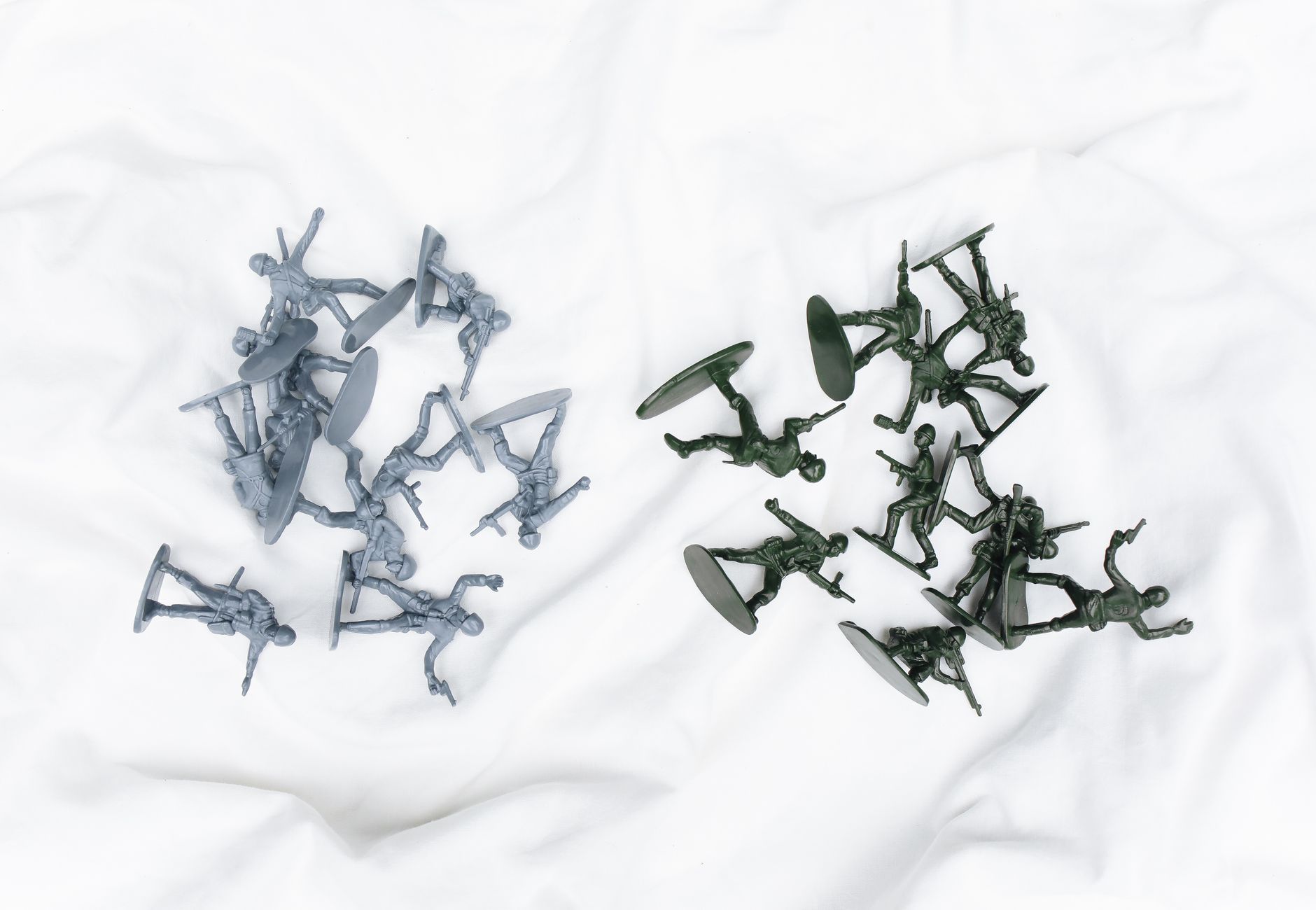 Photo by Polina Tankilevitch on Pexels.
This is a design failure. The post-game review is part of the game. If you treat it as an administrative formality, you are discarding half your data.
Why Debriefs Go Wrong
Here is the sequence that kills most after-action reviews. Players finish a scenario under stress. Someone senior opens the floor. The team that "won" explains why their approach was sound. The team that struggled explains what went wrong with the scenario. The facilitator synthesizes. Everyone agrees the exercise was valuable. Nothing changes.
The problem is structural: the people with the most to learn from a bad outcome are the people most motivated to reframe that outcome as something other than a bad outcome. Senior players especially will unconsciously reconstruct the scenario to make their decisions look reasonable given what they "knew at the time." Hindsight gets selectively applied. The actual surprise, the moment where the model broke, gets buried under post-hoc rationalization.
PETER PERLA documented a version of this in his 1990 work The Art of Wargaming, noting that the value of a wargame is only realized if the results are properly analyzed and fed back into planning. That feedback loop is where most organizations fail. The game generates signal; the debrief generates noise.
Build the Debrief Into the Game Design
The fix is not a better facilitator. Better facilitation helps, but you cannot talk your way out of a debrief that was never designed. You build the conditions for a useful autopsy before the game starts.
Three specific techniques:
Pre-commitment logs. Before the scenario runs, ask each player or cell to write down: what outcome they expect, what they will do if that expectation is wrong, and what would constitute a genuine surprise to them. Seal these. Open them at the debrief. Now you have a baseline that cannot be revised. Players cannot claim they "always knew" the cascade would happen if they wrote down the opposite two hours earlier.
Designated anomaly witnesses. Assign one person per cell to spend the game watching for moments where the situation diverged from doctrine or expectation. Not playing, not advising. Watching. Their job at the debrief is to present three specific moments where the game stopped behaving the way the model predicted. Give them a simple log sheet and a timestamp.
Red-team the debrief itself. Before the room agrees on lessons learned, assign one player to argue that the consensus interpretation is wrong. Not to be contrarian, but to stress-test whether the lesson actually follows from what happened. This takes about ten minutes and catches a surprising number of false conclusions.
graph TD
    A[Pre-commitment logs written] --> B[Scenario runs]
    B --> C{Anomaly witness logs}
    B --> D{Player decision record}
    C --> E[Debrief opens with anomalies first]
    D --> E
    E --> F[Consensus interpretation proposed]
    F --> G[Red-team the interpretation]
    G --> H(Revised lessons logged)
Anomalies First, Consensus Second
The sequencing of a debrief matters as much as the content. Most facilitators open with "what happened" and move toward "what we learned." Reverse the order: open with the anomalies, the moments where the game broke from expectation, and work backward to why.
This forces the room to engage with the surprise before they have settled into a narrative. Once players have committed to a story of what happened, they will fit anomalies into that story rather than letting anomalies reshape it. Present the anomaly first, while the room is still unsettled, and you get better analysis.
The RAND Corporation's wargaming literature (particularly work by David Shlapak and others on tabletop exercises) has consistently emphasized that the most valuable insights from a wargame are rarely the ones the designers anticipated. A debrief that is engineered to confirm the scenario's intended lesson is wasting the game's actual output.
What You Are Actually Looking For
A well-designed post-game review is not looking for "what went wrong." Every facilitator says that, and every player hears it as a threat. What you are actually looking for is: where did the model and the reality of the game diverge, and what does that divergence tell you about the model's limits?
That question is specific. It is answerable. And it does not require anyone to admit failure; it requires everyone to treat the game as an experiment rather than a performance review.
If your debriefs consistently produce the same lessons, your debrief is broken. Real games surface genuinely novel information. The review should reflect that, or you wasted a game.
Get Uncertainty Game in your inbox
New posts delivered directly. No spam.
No spam. Unsubscribe anytime.