The Parallel Track: Designing Wargames That Run a Shadow Game the Players Don't Know About
 E. Sokolov
Most wargames run on a single track. Players receive information, make decisions, adjudicators resolve outcomes, and the game moves forward. Everyone is, more or less, playing the same game.
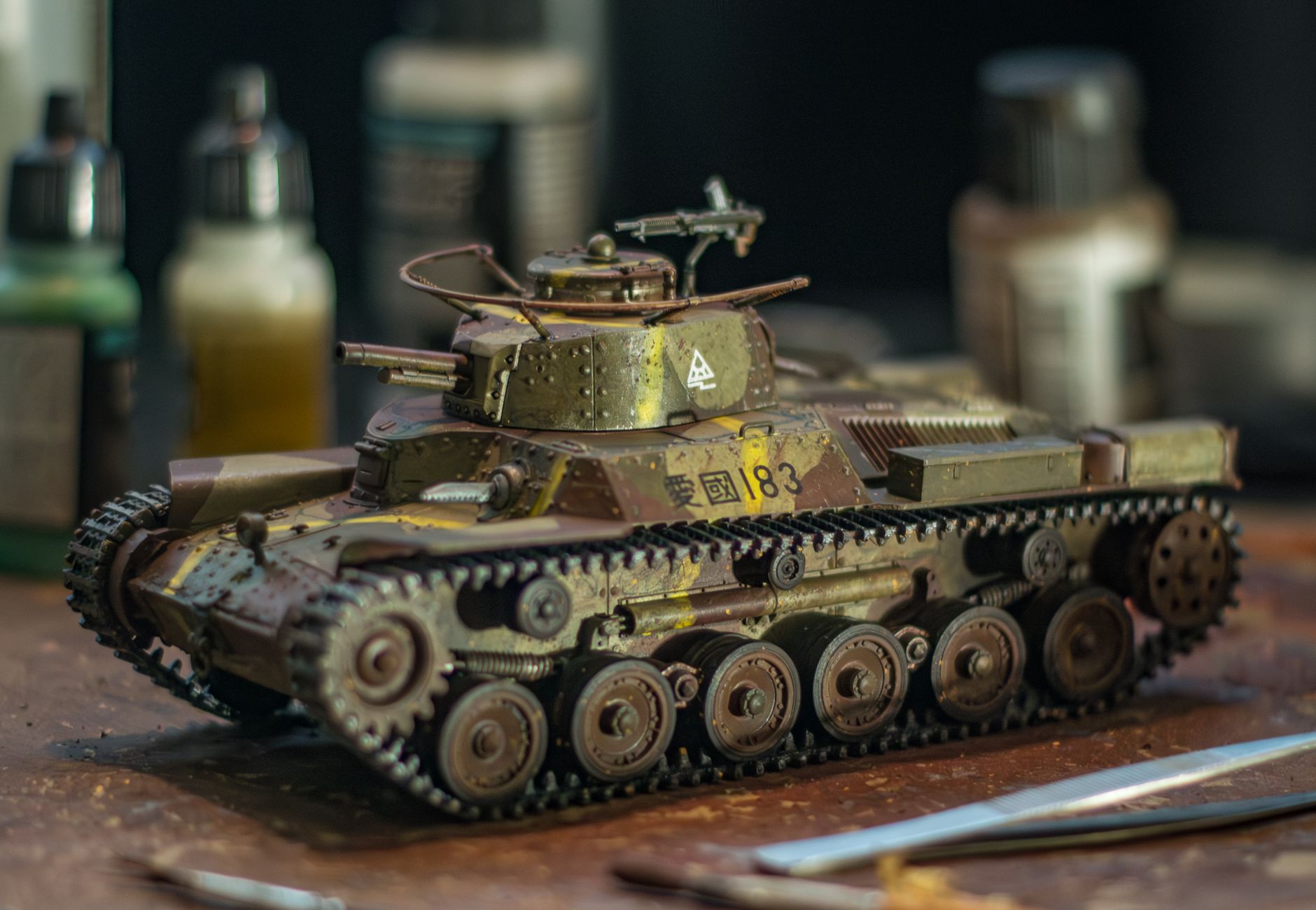 Photo by Matias Luge on Pexels.
The parallel track breaks that assumption deliberately.
The idea is simple enough to state and genuinely hard to execute: run a second, hidden game layer that evolves according to its own logic, invisible to the players but fully tracked by the control cell. Players interact with the surface game. The shadow game interacts with reality. When the two collide, strange things happen.
This technique has appeared in various forms across serious wargaming history. The Political-Military games run by the State Department's INR bureau in the 1960s occasionally used what facilitators called a "referee track", a separate set of moves being made by notional third parties that players had not modeled and could not interrogate. The 1983 Able Archer exercise (NATO, Supreme Headquarters Allied Powers Europe) inadvertently created a real-world parallel track when Soviet intelligence services ran their own assessment of whether the exercise was cover for an actual first strike. Two games, same events, entirely different threat calculus. The near-miss that resulted is well-documented.
You don't need Cold War stakes to benefit from the design principle.
What the Shadow Game Actually Does
The parallel track does three things that a single-layer game cannot.
First, it generates genuine surprises rather than engineered ones. When facilitators inject a twist into a standard game, experienced players often sniff it out. They've seen the playbook. A shadow game running on its own rules produces collisions that even the design team doesn't fully anticipate, because the second layer has real internal logic.
Second, it stress-tests player assumptions about who is playing. Most game participants implicitly model a closed system: the actors in the room, plus whatever the scenario brief describes. Shadow games reveal how badly that model breaks when an unmodeled actor has been making moves the entire time.
Third, it captures a specific class of tail event: the one that originates outside the players' cognitive perimeter. Cascades triggered by known actors can be gamed. Cascades triggered by actors the players never accounted for cannot.
How to Build One
Design the shadow game before you design the main scenario. This ordering matters. If you bolt the shadow layer on afterward, it will just become a delivery vehicle for pre-planned surprises. It needs its own win conditions, its own information state, and its own decision logic.
graph TD
    A[Main Scenario Brief] --> B(Player Decisions)
    B --> C{Adjudication}
    C --> D[Visible Outcomes]
    E[Shadow Game State] --> C
    C --> F[Shadow Game Update]
    F --> E
    D --> B
The shadow game feeds into adjudication but is never shown to players directly. Adjudicators must resist the urge to explain outcomes that seem anomalous. That anomaly is the signal.
Assign one control cell member exclusively to the shadow track. That person does not participate in main-game adjudication discussions. Their job is to update the shadow state after each main-game turn, ask what the shadow actor would do given current conditions, and pass one output per turn to the lead adjudicator, sealed. The lead adjudicator decides whether that output modifies visible outcomes. Most turns, it won't. Then it will.
Keep the shadow actor's logic document short: one page, written as a decision tree with no more than four branch points. Complexity in the shadow layer defeats the purpose. You want a coherent actor with a narrow goal, not a thriller plot.
The Debrief Is Where It Pays Off
Don't reveal the shadow game immediately after play ends. Run the standard hot debrief first. Let players explain their decisions, identify the moments that surprised them, and surface their own causal models. Record it.
Then reveal the parallel track in full.
The gap between player explanations and the actual causal chain is the data you came for. Players will have attributed outcomes to their own decisions, to each other, to the adjudicators. Almost none of them will have hypothesized an entirely unmodeled actor running a coherent separate game. That blind spot, made visible, is more useful than any red-team finding you can write into a report.
One practical note: warn senior participants before the game that a debrief surprise is coming, without saying what it is. Some organizations have real difficulty with facilitators revealing that something was hidden from principals. Managing that politically is part of your design work, not an afterthought.
The parallel track won't work every time, and it shouldn't be a standing feature of every exercise. Used selectively, once a year in a high-stakes institutional game, it reliably surfaces the class of assumption that no amount of pre-mortem analysis will touch: the belief, held by almost every player in almost every wargame, that they already know who is playing.
Get Uncertainty Game in your inbox
New posts delivered directly. No spam.
No spam. Unsubscribe anytime.