The Invisible Faction: Designing Wargames That Account for Actors Who Refuse to Play
 E. Sokolov
Every wargame has a cast list. You assign Blue, Red, maybe a Green representing local governance or a neutral third party. Players take their seats. The scenario begins. What almost no wargame accounts for is the actor who was supposed to show up and didn't, or who showed up and then deliberately did nothing.
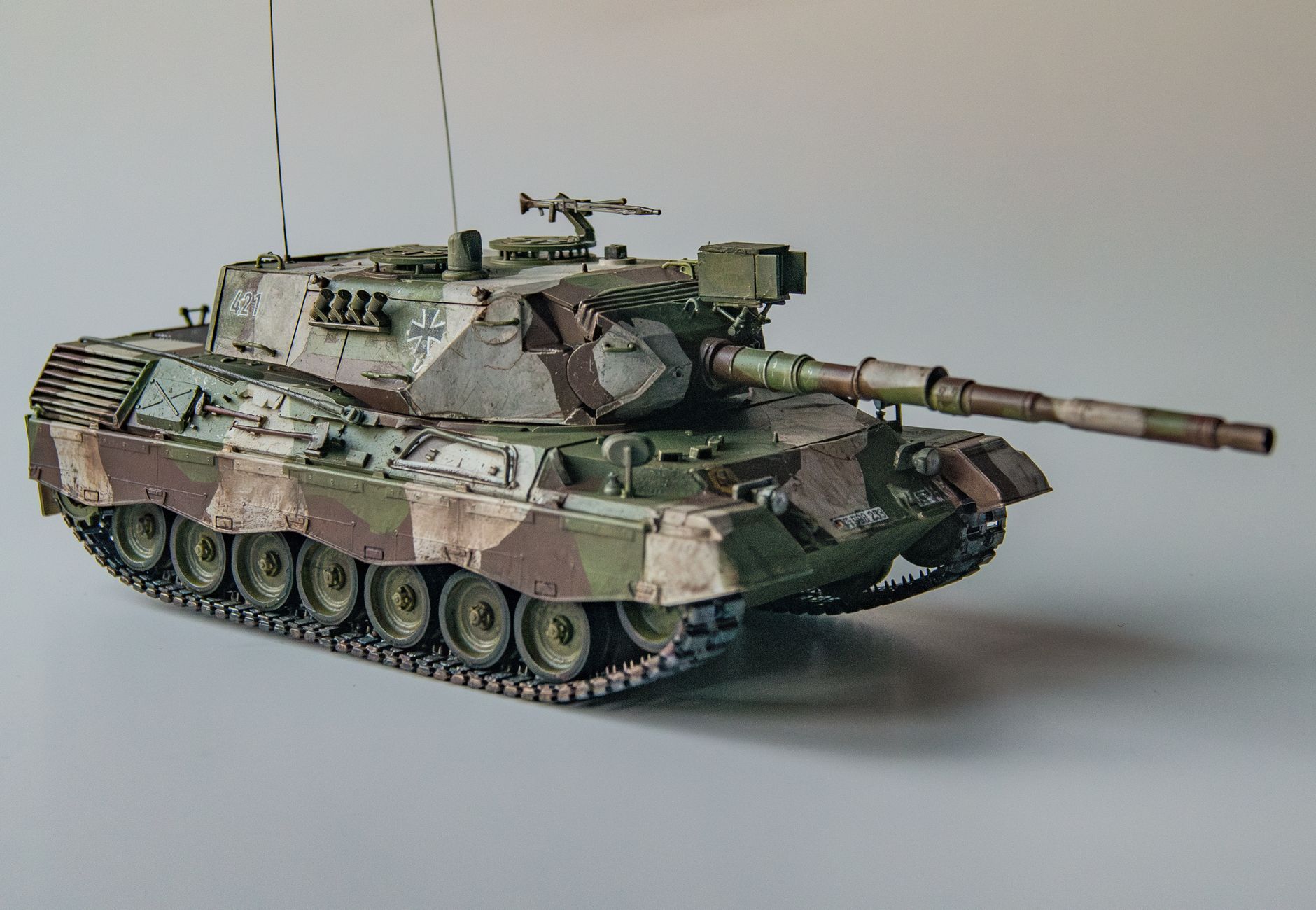 Photo by Matias Luge on Pexels.
Call this the invisible faction problem. The scenario assumes a certain number of players will respond, negotiate, escalate, or comply. When one of them goes silent or exits the board, the model breaks in ways designers rarely anticipate.
This is not an abstract concern. During the 2006 Lebanon War, several analysts noted that Hezbollah's strategic behavior confounded Israeli planning partly because the group refused to behave like a state actor constrained by the same cost calculus. It didn't need to win conventional engagements. Surviving was sufficient. The "actor" in the Israeli planning model was a proxy that would respond predictably to military pressure. The real faction had different objectives and a different definition of the game itself.
Wargames inherit this blind spot constantly. Designers build response curves into every role: if Blue does X, Red does Y. The adjudication tables assume all factions are continuously playing. Remove that assumption, and most games collapse.
Why Opting Out Is a Strategy
Refusal to engage is a power move that receives almost no formal treatment in wargame design. Consider three distinct versions of the invisible faction:
The deliberate abstainer. An actor with leverage who withholds it, forcing other players to bid for participation. Think of how Pakistan's ISI periodically goes opaque during regional crises, making US planners work around an absence rather than a presence.
The paralyzed bureaucracy. An actor who wants to engage but cannot, because its internal decision process has seized. The EU's response to the early stages of the 2022 Ukraine invasion involved member states whose domestic politics temporarily locked them out of coordinated action. They weren't hostile; they were frozen.
The exit threat. An actor who signals potential withdrawal as leverage, changing the behavior of every other faction without actually moving a piece on the board.
All three produce tail risks that standard wargames miss because the game rules assume continuous play.
How to Build the Invisible Faction Into Your Design
Here is a concrete approach. Run your scenario twice: once with all factions active, once with one faction replaced by a "silence card."
The silence card works like this. At the start of each turn, the game facilitator draws from a small deck. Most cards read "faction engages normally." A small number read "faction does not respond this turn" or "faction has withdrawn from the channel." Players representing other factions must decide how to act under uncertainty about whether the silent actor will re-enter.
This produces something useful: you learn which of your players' strategies are brittle to non-response. If Blue's entire plan depends on Red reacting, and Red simply doesn't, Blue's strategy fails in a way no amount of clever Red play would expose.
graph TD
    A[Turn Begins] --> B{Draw Silence Card}
    B --> C[Faction Engages Normally]
    B --> D[Faction Silent This Turn]
    D --> E{Other Players Adapt?}
    E --> F[Strategy Survives Absence]
    E --> G[Strategy Collapses]
    C --> H[Standard Adjudication]
Beyond the silence card, consider designing a faction whose explicit victory condition rewards non-participation. Give that player points for turns in which they took no action while other factions escalated. Watch how the room reacts. Players tend to get visibly uncomfortable when someone wins by doing nothing. That discomfort is data.
The Design Principle Underneath This
Your scenario's assumptions about who is playing are themselves a model. That model can fail. The invisible faction technique stress-tests the assumption that all relevant actors are continuously rational, continuously present, and continuously motivated to move pieces.
Historically, the most consequential wargame failures involve an actor behaving in ways that broke the game's participation assumption. In Able Archer 83, the Soviet Union's fear response looked like irrational overreaction to NATO planners who didn't realize the Soviets had, in a real sense, left the cooperative-competition model entirely and were playing a different game: pure threat-detection under paranoid conditions.
Building invisible factions into your game won't eliminate that risk. Speculation: it probably won't even surface most instances of it. But it will train your players to ask, at every turn, whether the actors they're counting on are actually still at the table. That habit of questioning is worth more than any adjudication table you'll ever write.
Get Uncertainty Game in your inbox
New posts delivered directly. No spam.
No spam. Unsubscribe anytime.