The Fog Machine: Designing Wargames That Degrade Information Quality Mid-Scenario
 E. Sokolov
Most wargames start with a clean information state. Players get a briefing packet. They know roughly what they know and what they don't. Then the scenario runs, and the information environment stays more or less stable unless the designer explicitly shakes it.
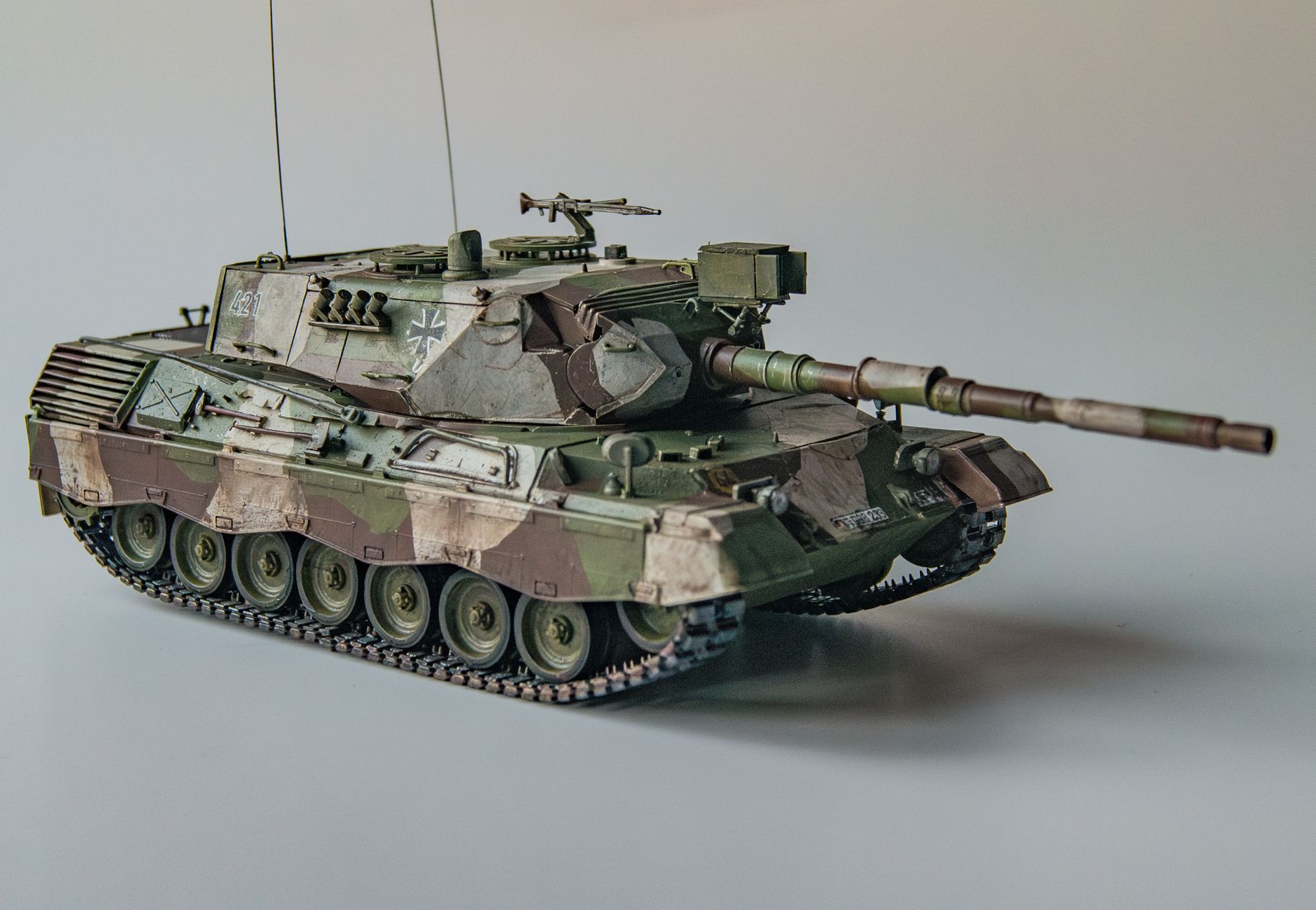 Photo by Matias Luge on Pexels.
That's the wrong model. Real crises don't degrade cleanly. They degrade unevenly, and the unevenness is where the tail events live.
Consider Global '83, the NATO exercise run in November 1983 that overlapped with Able Archer 83. Soviet intelligence, watching NATO command-and-control patterns from the outside, couldn't cleanly distinguish exercise from preparation for a first strike. The information degradation ran in both directions: NATO didn't know how badly Moscow was misreading the signals; Moscow didn't know how much of what it was seeing was noise. Neither side had a reliable picture of the other's information state. That double-blindness is exactly the kind of condition most wargame designs treat as a solved problem, when it's actually the problem.
So how do you build a wargame that degrades information quality on purpose, in ways that generate genuine surprise rather than scripted confusion?
Start with what I call source corruption, not random noise injection. Random noise teaches players to average over uncertainty. Source corruption teaches them something harder: that a trusted channel has gone wrong and they don't know when it went wrong or how far back the contamination runs. In the 1962 ExComm deliberations, HUMINT from Oleg Penkovsky was still shaping assessments even as his arrest (unknown to Washington) made that intelligence stale at best, fabricated at worst. Design the equivalent into your exercise. Give players three intelligence streams. Corrupt one silently, starting two turns before the scenario's main inflection point. Watch how long it takes them to notice.
The injection sequence matters. Here's a structure that works:
graph TD
    A[Clean Baseline: Turns 1-2] --> B(Introduce contradictory SIGINT)
    B --> C{Players reconcile or ignore?}
    C --> D[Silent source corruption begins]
    D --> E(Delay added to HUMINT reports)
    E --> F{Players update doctrine or persist?}
    F --> G[Introduce second-order contradiction]
The diamond nodes are adjudicator decision points. At each one, the umpire team reads player behavior and escalates or holds degradation based on whether players are adapting. If they adapt too quickly, the game teaches resilience. Push harder.
Beyond source corruption, build temporal displacement into your intelligence feeds. Reports arrive, but they describe conditions from four hours ago. Players don't know the lag unless they ask, and they can only ask if they know to ask. This sounds simple. It is operationally brutal. During the Yom Kippur War's opening hours, Israeli intelligence had pieces of the picture but the pieces were timestamped differently and nobody was reconciling the gaps. Build a wargame where every piece of player intelligence carries a hidden timestamp visible only to the umpire cell, and watch players confidently act on information that describes a world that no longer exists.
One failure mode to avoid: don't make degradation feel punitive. If players sense the designer is cheating them, they stop engaging authentically and start gaming the game. The degradation has to feel like a plausible operational environment, not a trick. Brief players after the scenario on every source-corruption event and show them the actual timeline. That debrief is where the learning happens. Players need to see exactly where their information model diverged from ground truth, and why the divergence felt invisible in the moment.
The harder design question is who knows what inside your control team. Segment your umpire cell so that the person managing SIGINT feeds doesn't know what the HUMINT cell is injecting. Let your control team's information state degrade slightly too. It creates a more authentic adjudication environment and occasionally surfaces second-order surprises that even the designers didn't anticipate. That's the signal you want: a scenario that generates outcomes the design team couldn't fully predict.
Run this kind of game twice with the same players. The first run surfaces how they fail under information degradation. The second run surfaces whether they've actually changed their intake process or just learned to distrust everything, which is a different pathology and equally dangerous.
The goal isn't to make players feel lost. The goal is to make them feel exactly as confident as they would feel in an actual crisis, right up until the moment they discover they shouldn't have been.
Get Uncertainty Game in your inbox
New posts delivered directly. No spam.
No spam. Unsubscribe anytime.