The Unreliable Clock: Designing Wargames That Break When Time Pressure Is Fake
 E. Sokolov
Most wargames treat time the way bad thriller writers treat weather: as atmosphere, not a variable. Turns tick forward. Adjudicators announce phase changes. Players know, at every moment, roughly where they are in the scenario arc. That knowledge is comfortable. It is also a lie.
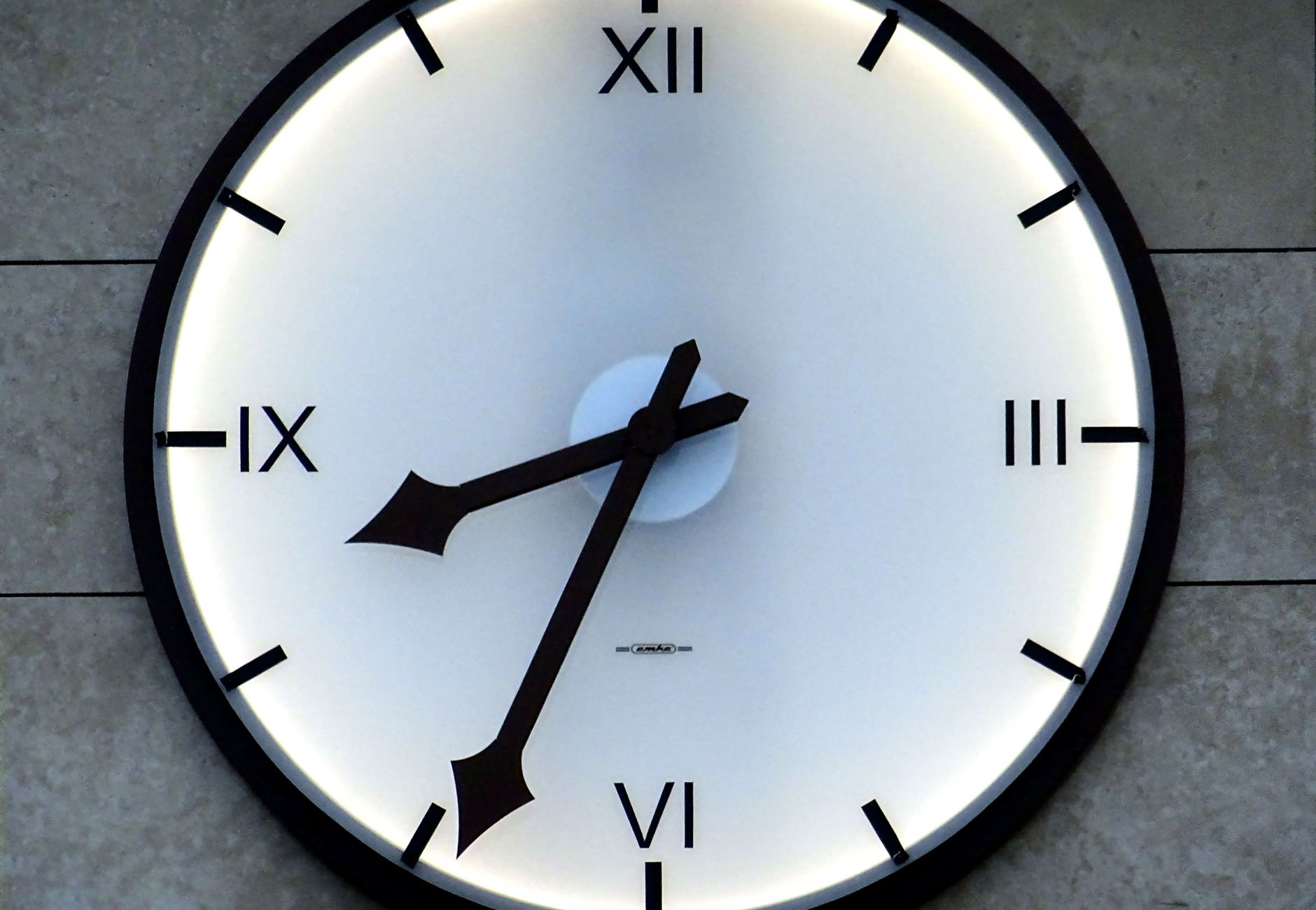 Photo by SevenStorm JUHASZIMRUS on Pexels.
Real decisions happen under radically uncertain timelines. Commanders don't know if they have six hours or six days. Analysts can't tell whether the observed buildup is preparation for an attack next week or a deception operation designed to look like one. The timeline itself is contested information. When your wargame hands players a reliable clock, you've already stripped out one of the most disorienting features of actual crises.
Here's how to break that clock deliberately.
The Three Failure Modes of Wargame Time
Before fixing the problem, name it precisely. Wargame time fails in three distinct ways.
Symmetric revelation. Both sides know when turns end. Red watches Blue deliberate and can pace accordingly. This eliminates the asymmetry that real adversaries exploit constantly. North Korea's 2010 shelling of Yeonpyeong Island was timed specifically around South Korean political transition dynamics. The timing was the weapon.
False granularity. Scenarios assign durations to actions that look specific but are actually arbitrary. "Resupply takes 4 hours" may be the median, but the distribution around that median is where crises live. RAND's 2015-era Baltic wargames (run repeatedly for NATO planning purposes) discovered that Blue's defensive timelines were built around mean transit times. Adversaries who could compress that distribution by even 20 percent invalidated entire operational plans.
Legible phase structure. When players can feel that they're in "the opening phase" versus "the endgame," they calibrate their risk tolerance accordingly. They sandbag resources early and spend recklessly late. Strip that legibility and the calibration collapses in instructive ways.
Three Design Moves That Actually Work
1. Give adjudicators a hidden timeline variance table.
Before the game, the control cell rolls or selects (secretly) a timeline multiplier for each action category: logistics, intelligence reporting, diplomatic signaling, force movement. Multipliers range from 0.6x to 1.8x. Players submit plans referencing standard durations. Adjudicators apply the hidden multipliers without announcement. Events arrive early or late. Players notice the slippage but can't diagnose the cause.
This is operationally honest. Supply chains don't fail on schedule. Intelligence products get delayed by unrelated bureaucratic friction. The design forces players to build slack into their timelines or suffer when they don't.
2. Let Red buy time distortion.
In the game economy, give Red a limited budget of "timeline manipulation" tokens. Spending one compresses Blue's perceived decision window on a specific action: Red can make something look more urgent than it is, or less urgent. Blue's adjudicated deadline gets quietly shifted. Control whispers to Blue players that the situation is "developing faster than anticipated" without explaining why.
This models a real capability. Adversaries manufacture urgency (crisis diplomacy, staged provocations) and suppress it (back-channel reassurances during actual mobilization). If Red can only do it twice per session, players learn to look for it without knowing when it's happening.
3. Run a blind clock.
Don't tell players what turn it is. Don't tell them how many turns remain. Give them a scenario start condition and let them play until control ends the game. Debrief them afterward on what turn they thought they were on versus what turn they actually occupied.
The gap between perceived and actual position in the timeline is diagnostic gold. Teams that thought they had time remaining and didn't had been anchoring to false signals. Teams that rushed decisions in what they perceived as the final phase, but were actually in the middle of the scenario, reveal a different pathology: they were reading irrelevant cues as terminal.
graph TD
    A[Player Submits Action] --> B{Adjudicator Applies Hidden Multiplier}
    B --> C[Early Resolution]
    B --> D[Standard Resolution]
    B --> E[Delayed Resolution]
    C --> F(Player Recalibrates)
    D --> F
    E --> F
    F --> G[Next Decision Cycle]
What You're Actually Testing
None of this is about making players feel bad. Run these designs and you'll surface something specific: which organizations build planning buffers and which assume the median will hold. You'll find out whether your red team can actually exploit time asymmetry or just talks about it. You'll discover whether senior players hoard decision authority during ambiguous timeline periods, creating bottlenecks that compound the original uncertainty.
Those findings don't show up when the clock is visible and reliable. They require a game that's willing to lie about time, the way adversaries and reality itself routinely do.
The goal is a scenario where players finish and genuinely aren't sure whether they acted too early, too late, or at exactly the wrong moment for reasons they still can't fully reconstruct. That discomfort is the point. Certainty about time is a planning assumption. Stress-test it like one.
Get Uncertainty Game in your inbox
New posts delivered directly. No spam.
No spam. Unsubscribe anytime.