The Vanishing Mandate: Designing Wargames That Expose When Player Authority Evaporates Mid-Crisis
 E. Sokolov
Most wargame designs treat player authority as a fixed property. You assign roles, hand out decision rights on day one, and watch people exercise them. That setup misses something important: in real crises, mandates erode. Quietly, unevenly, and usually at the worst possible moment.
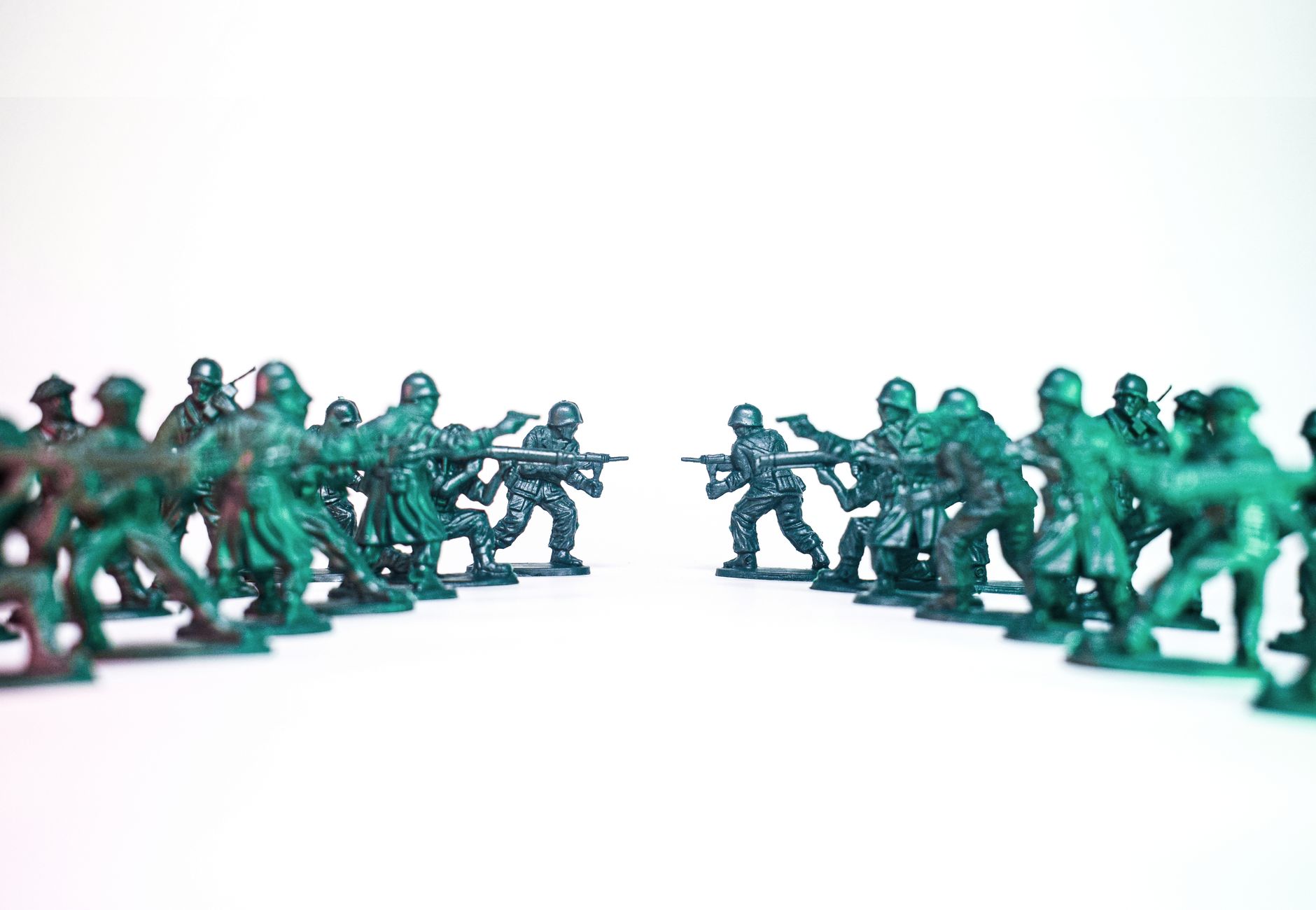 Photo by Saifee Art on Pexels.
Consider what happened during the 1983 Able Archer exercise. Participants on the NATO side held formal decision authority. But as the scenario escalated, Soviet signals intelligence apparently interpreted the exercise as potential cover for a real first strike. The people nominally in charge of NATO's response were, in a meaningful sense, operating without full situational awareness of what their authority actually meant to the adversary. The mandate was intact on paper. Its operational grip was something else.
This is the failure mode worth designing for: not that players lack authority, but that their authority becomes functionally hollow as conditions shift beneath them.
What "Vanishing Mandate" Actually Looks Like
Authority evaporates in predictable patterns. Recognizing them is the first step toward building scenarios that stress-test them.
Lateral override. A peer organization, a political appointee, or an allied command starts making decisions in your player's domain without formally revoking anything. The player still holds the title; the calls are happening elsewhere.
Upward collapse. A crisis escalates past the threshold where senior leadership feels comfortable delegating. Principals pull decisions back up the chain. Your player is still in the room but no longer in the loop.
Informational isolation. The player retains authority but loses the data feeds that make it exercisable. This is distinct from fog-of-war mechanics. The question here is whether players notice the difference between "I have authority and good information" and "I have authority and nothing actionable to do with it."
Legitimacy challenge. Another player (or an inject) contests whether the authority was ever valid. Interagency disputes, coalition friction, and legal ambiguity all produce this. The mandate doesn't disappear; it gets argued.
Each pattern demands a different design response.
Mechanics for Eroding Authority
The core design problem is timing. If you strip authority at a dramatically obvious moment, players adapt consciously. The real phenomenon is subtler: the erosion happens before anyone names it.
One approach is the delayed notification rule. When a lateral override occurs, don't tell the affected player immediately. Give the overriding actor a move, resolve it, then surface the notification two turns later. Players will often have already acted on assumptions that no longer hold. Debriefing that gap is where the learning lives.
For upward collapse, build an explicit principal-recall trigger into your scenario matrix. When escalation crosses a defined threshold (a casualty figure, a geographic line, a public statement), a control-team adjudicator notifies affected players that certain decision classes have been recalled. The trigger itself needn't be predictable; players can know the mechanism exists without knowing when it fires.
A Mermaid diagram helps clarify the authority-erosion sequence you're designing against:
graph TD
    A[Player holds mandate] --> B{Escalation threshold crossed?}
    B -- No --> C[Authority intact]
    B -- Yes --> D{Erosion type}
    D --> E[Lateral override]
    D --> F[Upward collapse]
    D --> G[Informational isolation]
    D --> H[Legitimacy challenge]
    E --> I(Player acts on stale mandate)
    F --> I
    G --> I
    H --> I
    I --> J[Debrief: When did player realize?]
The payoff node is J. Every variant of authority erosion routes through the same diagnostic question: at what point did the player's behavior change, and did they ever explicitly name what had happened?
The Debrief Design
Vanishing-mandate scenarios are only useful if the post-game review is built to capture the right data. Ask players three specific questions.
First: at what turn did you feel your authority was fully intact? Second: at what turn did you first feel uncertainty about it? Third: what decision, if any, did you make as if your authority were still whole when you already suspected it wasn't?
That third question is the one that stings. Players almost always answer it. They almost always find at least one move.
Record not just what players say but what they avoid saying. A player who describes their late-game actions entirely in terms of information constraints, without once mentioning authority, may be telling you something about how their organization actually conceptualizes these failures: as intel problems, not governance problems.
A Note on Scope
This mechanic works best in exercises involving interagency coordination, coalition operations, or any scenario where multiple organizations hold overlapping decision rights. Pure single-organization command exercises have fewer natural vectors for lateral override and legitimacy challenges. You can still inject them, but the setup requires more scaffolding.
For domestic crisis simulations (emergency management, infrastructure response), upward collapse and legitimacy challenge are the most fertile patterns. Federal-state authority disputes during a disaster scenario will trigger both almost automatically if your inject sequence is honest about how those relationships actually work under pressure.
Building this well requires resisting the urge to make the erosion legible in real time. Leave it ambiguous. Let players carry a mandate they can no longer fully exercise. That discomfort, unresolved mid-scenario, is the point.
Get Uncertainty Game in your inbox
New posts delivered directly. No spam.
No spam. Unsubscribe anytime.