The Preference Reversal: Designing Wargames That Expose When Players Change Their Minds Under Pressure
 E. Sokolov
Every pre-game survey looks the same. Players state their priorities, rank their risk tolerances, describe what they would and would not trade away. Then the scenario starts. By turn three, half of them are doing the opposite.
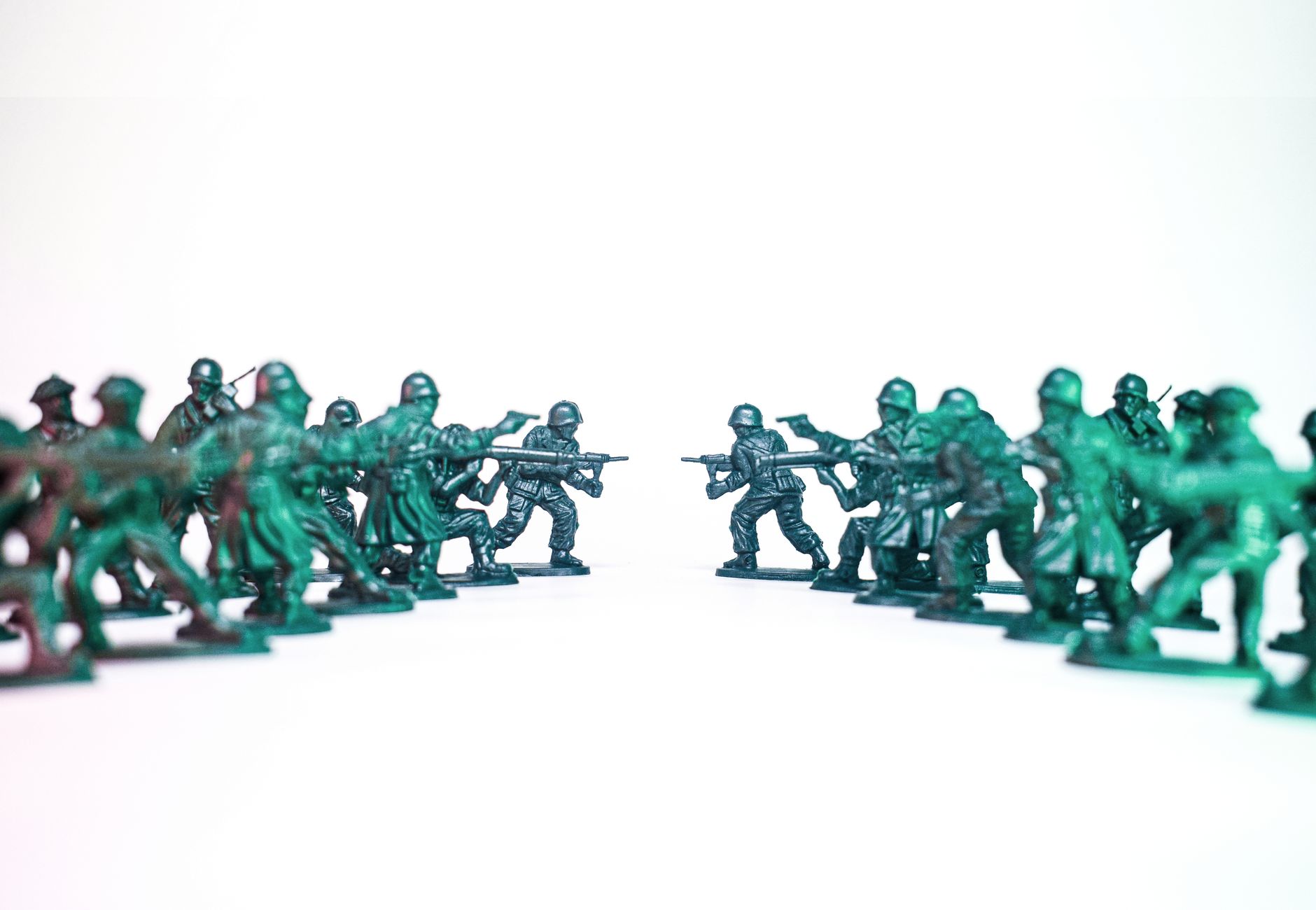 Photo by Saifee Art on Pexels.
This is not a bug. Preference reversal under pressure is one of the most consistent findings in behavioral decision research, and wargame designers almost universally fail to build for it. They run post-game reviews that compare outcomes to objectives, but they rarely instrument the game to catch the moment a player reversed course and, more usefully, what triggered it.
Designing a game that surfaces preference reversal requires treating stated preferences as live hypotheses, not fixed inputs.
Why Standard Games Miss This
Most wargames record decisions. They do not record the reasoning behind decisions, and they have no mechanism for flagging when a decision contradicts an earlier stated position. The debriefing catches the outcome; it misses the pivot.
Consider RAND's 1960s political-military games, which involved senior officials playing cabinet-level roles. Participants would enter with clear stated positions on escalation thresholds. Under simulated time pressure, those thresholds shifted, sometimes dramatically. The shift was observable to facilitators in the room, but because no one had built a tracking instrument into the design, the reversal got washed out in the after-action narrative. Players remembered the outcome, not the turn where they quietly abandoned their own red line.
The problem compounds when preference reversal is socially invisible. Players rarely announce that they are changing their position. They reframe. The thing they said they would never do becomes "a necessary tactical adjustment." Wargame design has to be paranoid about reframing, because reframing is how preference reversals survive a debrief unchallenged.
Building the Tracking Architecture
The core mechanism is a preference ledger: a structured record of each player's stated priorities collected before the game begins, revisited at fixed intervals, and compared against observed decisions by a designated tracker who sits outside the action.
This is not a questionnaire. A questionnaire lets players hedge. Instead, force commitment: ask players to rank three things they will protect above all others, then ask them to name one thing they will sacrifice first if forced to choose. Write it down. Date it. Put it in an envelope if the theater allows.
During the game, the tracker's job is to log every major decision against that ledger without interrupting play. When a player's action contradicts a stated commitment, the tracker notes the turn, the trigger condition, and the stated justification. No real-time challenge. Just documentation.
At a mid-game pause (not the end), each player receives their own ledger back and is asked a single question: does this still reflect your position? Players who say yes when the record shows otherwise will often hesitate. That hesitation is data.
graph TD
    A[Pre-Game: Preference Ledger Completed] --> B(Tracker Monitors Decisions)
    B --> C{Decision Contradicts Ledger?}
    C -->|No| B
    C -->|Yes| D[Tracker Logs: Turn, Trigger, Justification]
    D --> E(Mid-Game Ledger Review)
    E --> F{Player Revises Position?}
    F -->|Yes| G[Log Revised Preference + Context]
    F -->|No| H[Flag Potential Reframe for Debrief]
    G --> B
    H --> B
Injecting Conditions That Trigger Reversal
A well-instrumented game with a boring scenario will catch nothing. You need conditions that are actually likely to produce reversal. Three categories have shown consistent results in exercises I have reviewed or run:
Sunk cost accumulation. Design a mid-scenario injection where a player has already invested significant resources in a course of action that is now visibly failing. Players who stated they would cut losses will often double down. The injection does not need to be dramatic; a quiet update that a previously successful operation has stalled is enough.
Constituency pressure. Introduce a message, late in turn two or early in turn three, from a faction the player nominally represents. The message applies pressure to reverse a decision the player just made. Players who stated they prioritize mission over politics will frequently accommodate the pressure anyway. This is not weakness; it is realistic. But if the game does not capture it, the player goes home believing they held firm.
Asymmetric loss framing. Rephrase the same situation twice, using gain framing the first time and loss framing the second. This is a clean behavioral manipulation: most players will choose differently depending on framing, even when the underlying math is identical. Running this as a deliberate design element, at a real decision point, surfaces something that no amount of pre-game surveying can predict.
What the Debrief Needs to Do
The debrief for a preference-reversal exercise has one primary obligation: present the evidence before players construct their retrospective narrative. Once a player has explained why they made a decision, that explanation becomes sticky. Show the ledger data first.
Ask players to identify the turn where the reversal happened, not whether it happened. Conceding that it happened is easier when the question assumes it as a given. Then work backward: what was the information environment at that moment? What had changed since the pre-game commitment was made? Was the reversal a genuine update based on new evidence, or was it pressure-driven drift?
The distinction matters for institutional learning. A genuine update is a sign the player was responsive to information. Pressure-driven drift is a warning about how that institution will actually behave when a real crisis narrows options and raises stakes.
The game cannot predict what players will decide. It can absolutely catch when they stop deciding according to their own stated values, and that gap is where most organizational surprises live.
Get Uncertainty Game in your inbox
New posts delivered directly. No spam.
No spam. Unsubscribe anytime.